Services · Market entry
Which Asia-Pacific market first, in which order, and what it actually takes to land
For established technology and industrial businesses expanding into or across Asia Pacific, and the ones already here who then have to land in Europe or the US. Portfolio companies with a regional mandate and no playbook.
The decision you are actually making
Not whether to expand. Which market first, through which route, and whether the model that works at home survives the trip.
The expensive mistake is the same everywhere: hire a regional lead before the motion is proven. That burns twelve to eighteen months of runway on a capable person with nothing to execute. Sequencing is the decision. The hire comes after.
What I do
- A market-sequencing plan: which markets, in which order, with the reasoning stated so it can be argued with rather than accepted
- Partner and channel selection: who actually sells this, and what they expect in return
- The regulatory and localisation pathway: what has to be true before you can sell
- A first-100-days launch plan: what happens in the first quarter on the ground
I will also tell you when the answer is not to go. That is not a hypothetical position.
A Singapore-based company can have part of the market-entry cost co-funded: MRA and the rest of the expansion grants, in the 2026 handbook.
Start with the public data
APAC Go-to-Market Country Intelligence scores 22 Asia-Pacific markets across three lenses (B2B market readiness, B2C digital adoption, investment attractiveness) from World Bank, ITU, WIPO and national tax-authority data. Nine exhibits and the full 117-measure dataset. Free to download and reuse with attribution, no form.
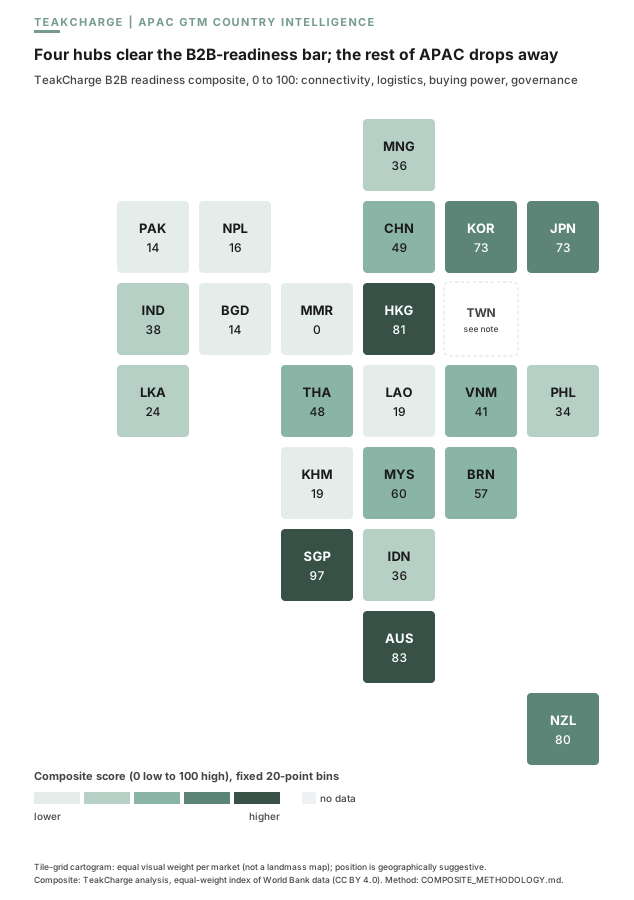
It will not make the decision for you. It will give you a scored shortlist you can argue with, which is where a sequencing exercise should start. If two markets are already on your list, the first conversation is a second read on those two, with the weights set for your sector.
The record
A China-to-Europe expansion, 2025, and the risk that ended it
A Chinese energy-technology group, strong at home, with a hard 2030 international-revenue ambition. I sat with the leadership in China and designed two routes, including a European beachhead in a market where I hold both the language and the network. The work stopped at the proposal. A year later the client confirmed they would not pursue Europe, on exactly the geopolitical risk named in the first meeting. Read the case.
Before 2025
At Samsung: built the US channel partner network from zero to tens of millions in US sales, and secured EU regulatory certification for the connected-car platform. At McKinsey: architected a European market-entry blueprint for global Tier 1 banks. That programme was stopped when the evidence said the existing infrastructure could not carry the design. I have operated this corridor in both directions.
Before the first call
Send the materials behind the decision and I will have read them first. The 30-minute conversation opens on a written first view: three things I can already see in the material, plus the one question a first phase would have to answer. If this is not my work, you hear that on the call. Whoever you speak to is the person who does the work and answers for it.
If it fits, the next step is a diagnostic sprint: two to three weeks on one question, ending in a one-page verdict and a go or no-go on anything further. How an engagement actually runs.
Talk it through before you commit
A short call is the cheapest way to find out whether this is your next step.